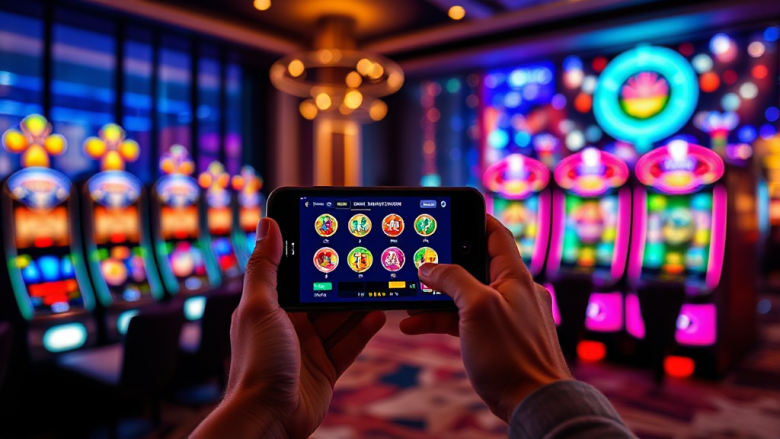
Why Free Spins Still Feel Like Something: The Psychology of Demo Play
There is a small, strange moment that almost everyone who has ever tried a slot demo recognises. The reels are spinning, the credits on the screen are pretend, and yet the body leans in. Shoulders tighten. The eyes stop blinking for a second. Nothing real is at stake, and still something in the chest reacts as the symbols slow down and the last reel decides what happens next. It is a curious little contradiction, and it is the reason ทดลองเล่นสล็อต เว็บสล็อตแตกง่าย has become such a popular way for Thai players to explore games before committing anything at all. If the money is not real, why does the moment feel real? The answer sits somewhere between how our brains are wired, how games are designed, and what we quietly bring to the screen ourselves.
The Near-Miss That Is Not Really a Miss
Think about the last time you watched a spinning reel slow down and stop one symbol away from a tempting line-up. Two matching icons land, the third slides past, and the game is over. Nothing was won. And yet the feeling is not the same as a total miss where the symbols scatter randomly and the round just ends. That gap between a near-miss and a clean miss is one of the most studied effects in behavioural science, and it shows up in demo play just as clearly as anywhere else.
The reason is that our brains are pattern-hunting machines. We are built to notice almost-patterns, almost-sequences, almost-connections, because in ordinary life those almosts often carry useful information. A branch that almost cracks, a car that almost stops, a person who almost tells the truth. So when two symbols line up and a third hovers nearby, the brain does not file it away as a failure. It files it away as a strong signal, something close, something worth watching. The emotional response is closer to anticipation than disappointment, even when the outcome is identical in value: zero.
In a demo, this effect is oddly pure. There is no money to distract you, no bankroll maths running in the background, no decision about whether to keep going. What is left is just the shape of the event itself, and the shape of a near-miss is genuinely more interesting to watch than a flat miss. That is one reason trial spins can feel surprisingly engaging even when the stakes are imaginary.
Anticipation Is the Real Entertainment
Most people assume the fun of a slot is the win. Watched closely, though, the fun is mostly the wait. The moment before the result is where the body does its work: the held breath, the lean forward, the tiny pause in conversation. A win is satisfying for a second or two, but the anticipation before it can stretch across several seconds and hold attention the whole way. Games are designed around this, and demos let you feel the design without any of the financial noise.
There is a simple everyday analogy. Think about opening a parcel you have been waiting for. The pleasure is not only in what is inside. It is in the cutting of the tape, the lifting of the flap, the half-second before you see it. If the parcel were empty, the anticipation would still have happened. That is roughly what a demo spin offers: the parcel-opening feeling, without the parcel. It sounds like it should be hollow, and for some people it is. But for many, the anticipation itself is the point.
This is also why demos are useful as a kind of emotional preview. You can notice which games make you lean in and which ones leave you flat, and that information is genuinely useful when you later decide what to spend time on. A game that produces no anticipation in free play is unlikely to produce much in paid play either, because the underlying design is the same. The difference is only in what is attached to the outcome.
What Trial Play Actually Lets You Notice
When nothing is at stake, attention behaves differently. It wanders more freely, and it picks up details that a tense player would miss. This is one of the quiet strengths of trial play, and it is worth being deliberate about. A demo session is not just a warm-up; it is a chance to observe the game as a piece of design rather than as a source of outcomes.
You can notice the rhythm of the reels. Some games spin fast and snappy, others take their time, and that pacing changes how the whole session feels. You can notice how often the screen does something visually interesting even when nothing is won, because modern slot design often builds small rewards into the visuals themselves. You can notice whether bonus features arrive in a way that feels earned or arbitrary, and whether the game explains itself clearly or leaves you guessing. None of this requires money, and all of it is easier to see when you are calm.
There is also a subtler thing to notice: your own reaction. Does a near-miss pull you forward, or does it annoy you? Do you enjoy the base game, or are you only tolerating it while waiting for a feature? Do you find yourself wanting to speed things up, or are you happy to let the reels take their time? These are not trivial questions. They are the difference between a game that suits you and one that quietly grates on you, and trial play is the cheapest possible way to find out. Sites that organise demos well, such as the ones gathered around ทดลองเล่นสล็อต เว็บสล็อตแตกง่าย, make this kind of browsing much easier because you can move between games without friction.
The Quiet Difference Between Demo and Real Play
It would be dishonest to pretend that a demo and a real session feel identical, because they do not. The anticipation is real in both, but the weight behind it is different. In a demo, the outcome is emotionally interesting but practically weightless. In a real session, the same spinning reels carry consequences, and that changes how the brain processes the whole event. Attention narrows. Time perception shifts. Small wins feel smaller and losses feel larger, because they are attached to something you can lose.
This is exactly why trial play is valuable as a comparison point. If you have spent time with a game in demo mode, you already know its rhythm, its feature frequency, and its visual language. When you later play it for real, you are not learning the game and managing your emotions at the same time. You are doing one job instead of two. That separation is not a guarantee of anything, but it is a genuine advantage in clarity, and clarity is usually the thing that suffers most when stakes are involved.
It is also worth saying plainly that a demo cannot tell you what will happen next. Games use random outcomes, and no amount of free spinning changes the odds of a future round. What a demo can tell you is how a game feels, how it is structured, and whether you enjoy spending time with it. That is a smaller claim than some marketing makes, but it is an honest one, and it is enough to be useful.
Why the Feeling Survives Even When You Know Better
Here is the part that surprises people most. Even when you know perfectly well that the credits are imaginary, the lean-in still happens. Knowing does not switch off the response, because the response is not really about the money. It is about uncertainty resolving in real time. The brain is tracking a question with an unknown answer, and it does not fully care whether the answer matters in the long run. It cares that the answer is coming.
This is the same mechanism that makes a close football match gripping even in a friendly, or a mystery novel hard to put down even though the characters are invented. We are drawn to resolution. A spinning reel is a small, repeated resolution machine, and demos let you watch the machine work without paying for the output. That is not a flaw in the design. It is the design, seen clearly.
Understanding this does not ruin the fun. If anything, it makes the fun easier to hold lightly. You can enjoy the anticipation for what it is, a small piece of mental theatre, and still keep a clear head about what demo play can and cannot tell you. That balance is the whole point of a good trial session, and it is why so many players treat free spins as a way to explore rather than a way to chase.
คำถามที่พบบ่อย (FAQ)
ทำไมการหมุนฟรีถึงยังรู้สึกตื่นเต้นทั้งที่ไม่มีเงินเดิมพัน?
เพราะสมองตอบสนองต่อความไม่แน่นอนที่กำลังคลี่คลายมากกว่าตัวเงินเอง ในช่วงที่วงล้อหมุนช้าและกำลังจะหยุด สมองกำลังติดตามคำถามที่ยังไม่มีคำตอบ ความรู้สึกลุ้นจึงเกิดขึ้นจริง แม้รางวัลจะเป็นเพียงเครดิตจำลอง
การทดลองเล่นบอกอะไรได้บ้างเกี่ยวกับเกมจริง?
มันบอกได้ว่าเกมมีจังหวะเร็วหรือช้า มีฟีเจอร์บ่อยแค่ไหน ภาพและเสียงให้ความรู้สึกอย่างไร และคุณสนุกกับมันหรือไม่ แต่บอกไม่ได้ว่าผลรอบต่อไปจะเป็นอะไร เพราะผลลัพธ์เป็นแบบสุ่ม
ควรใช้เวลากับทดลองเล่นนานแค่ไหน?
ไม่มีคำตอบตายตัว หลายคนใช้เวลาสั้น ๆ ต่อเกมเพื่อดูจังหวะและฟีเจอร์ แล้วค่อยย้ายไปเกมอื่น การทดลองเล่นมีไว้เพื่อทำความรู้จักเกม ไม่ใช่เพื่อทำนายผล
ทำไมบางเกมรู้สึกน่าสนใจแม้ไม่มีเงินเดิมพัน?
เพราะการออกแบบเกมสร้างความคาดหวังผ่านจังหวะวงล้อ เอฟเฟกต์เสียง และการเข้าใกล้ของสัญลักษณ์ ความตื่นเต้นจึงมาจากโครงสร้างของเกมเอง ไม่ได้มาจากมูลค่ารางวัลเพียงอย่างเดียว
In the end, the strange little lean-in is not a sign that something is wrong with you. It is a sign that you are a pattern-hunting, anticipation-loving creature, and a spinning reel presses exactly those buttons. Demo play lets you enjoy that machinery with the volume turned down, which is a perfectly reasonable way to spend a curious afternoon.