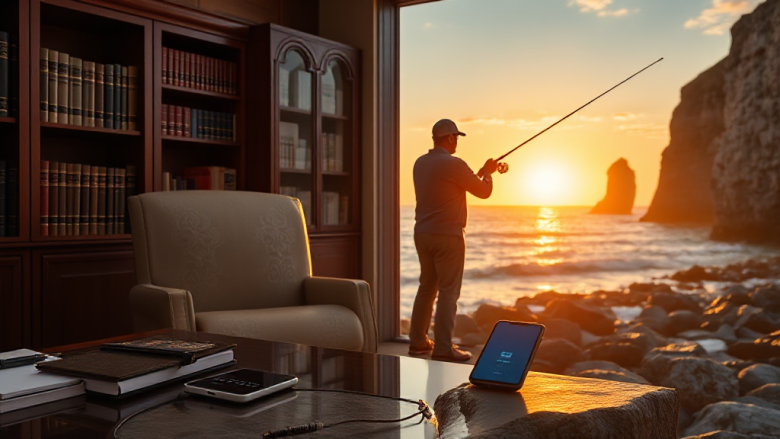
Fishing in Portugal for First-Timers: A Step-by-Step Legal Timeline
You step off the plane in Lisbon, Faro or Porto, feel the Atlantic breeze, and start picturing yourself casting a line from a rocky shore before dinner. Then a small, uncomfortable thought arrives: can I actually just buy a rod and fish here? For most visitors, the honest answer is no. Mainland Portugal requires recreational sea anglers to hold a valid fishing license, and “I didn’t know” is not a defence that a maritime authority officer will accept. The good news is that the process is simpler than most first-timers expect, and it can be handled online in a few minutes. This walkthrough follows a calm chronological timeline, from the moment you land to the moment your first bait hits the water.
Stage 1: Before You Book the Trip — Know What You Are Getting Into
Before flights and hotels, spend ten minutes understanding the legal landscape. In mainland Portugal, recreational sea fishing from the shore, from rocks, or from a boat is regulated by the DGRM, the national directorate responsible for maritime resources. A licence is required for most forms of recreational sea angling, and the rules differ from those in many home countries where shore fishing is often unregulated.
This is not a bureaucratic trap aimed at tourists. It is a system designed to protect fish stocks along a coastline that stretches for hundreds of kilometres and supports both commercial and recreational fishing. Once you accept that the licence is part of the holiday admin, like travel insurance or a rental car, the rest of the timeline becomes straightforward. The key point for a first-timer is this: sort the paperwork before you arrive, not after, because the last thing you want is to waste a perfect morning hunting for a solution on a bad hotel connection.
If you are planning fishing in portugal for the first time, treat the licence as a pre-departure task, not an on-arrival surprise.
Stage 2: The Week Before Departure — Gather What You Actually Need
The application itself is short, but it helps to have your details ready. In practice, you need your personal identification information and a way to pay. One of the pleasant surprises for visitors is that the modern online route does not require a Portuguese tax number (NIF) and does not force you through a confusing government portal. That removes the two biggest obstacles that used to send tourists to a local office in a mild panic.
Set aside a quiet moment at home, open a laptop or phone, and prepare the following:
Your passport or ID details, matching the name exactly as it appears on your travel documents. A payment method that works internationally, such as a debit or credit card. Access to Apple Pay or Google Pay if you prefer a faster checkout. A rough idea of your fishing dates, so the licence covers the right period.
You do not need to own a rod yet. You do not need to book a charter. You do not need to speak Portuguese. The licence is about you as an angler, not about the gear you will eventually rent or borrow. This stage is simply about removing friction so that the actual application takes three minutes rather than thirty.
Stage 3: Applying Online — The Three-Minute Step That Makes You Legal
This is the core of the timeline, and it is deliberately undramatic. Using a service built for visitors, you fill in your details, choose your licence type, and pay. Card, Apple Pay and Google Pay are all accepted, which means the checkout feels like any other travel booking. The whole process is designed to take about three minutes, and you receive confirmation without needing to visit an office, print a form, or queue behind someone arguing about a stamp.
For a first-timer, the psychological benefit is huge. You are not trying to decode a foreign government website while jet-lagged. You are not guessing which category applies to a tourist casting from a beach. You are simply completing a clear application and getting a document that says you are allowed to fish. Once that is done, the legal side of your trip is essentially finished, and you can return to the fun part: researching marks, tides and species.
Do this at least a few days before you fly. It is not strictly a race, but leaving it to the airport gate adds stress for no reason. The calm version of this holiday includes a licence already sitting in your inbox before the suitcase comes out.
Stage 4: Landing in Portugal — What to Carry and What to Expect
You have landed. Passport stamped, bag collected, first coffee acquired. Now, keep your licence accessible. In practice, this means having a digital copy on your phone and, if you like belt-and-braces security, a printed copy in your day bag. Authorities can ask to see proof that you are licensed, and being able to show it quickly turns a potentially awkward conversation into a ten-second formality.
It is also worth understanding where you can and cannot fish. Recreational sea fishing in mainland Portugal generally covers shore and boat angling, but there are protected areas, nature reserves, commercial zones and local restrictions that vary by region. A licence makes you legal as an angler, but it does not override local no-fishing zones. Ask at a local tackle shop, check signage at the beach, and respect any closed areas. First-timers who combine a valid licence with basic local courtesy rarely have problems.
If you are renting gear, the shop will often know the local rules and can point you to beginner-friendly spots. If you brought your own rod, check that it is suitable for the conditions. The Atlantic is not a gentle lake, and a lightweight setup that works at home may struggle on an exposed Portuguese shore.
Stage 5: Your First Fishing Day — Turning Paperwork into Practice
This is the day the timeline pays off. You wake up, check the tide and wind, pack your licence, and head to the water. Because the legal question is already settled, your mental energy goes entirely into fishing: reading the surf, choosing a bait or lure, and learning how the local fish behave.
For a nervous first-timer, the best approach is to start simple. Pick an accessible beach or harbour wall rather than a remote cliff. Fish the hours around dawn or dusk, when fish are often more active and the light is kinder. Watch what local anglers are doing, and do not be shy about asking polite questions. Portuguese anglers are generally welcoming to visitors who have made the effort to get licensed and who respect the environment.
Keep your expectations realistic. Your first session may produce nothing but a beautiful sunrise and a new appreciation for the Atlantic. That is still a success. The goal of this first trip is to learn the rhythm of portugal fishing without any legal worry hanging over you. Everything else, including the fish, comes with repetition.
One practical tip: keep your licence on you even on days you are not sure you will fish. Plans change on holiday, and a spontaneous evening cast is much more enjoyable when you know you are covered.
Stage 6: Common First-Timer Mistakes and How to Avoid Them
Most problems faced by visiting anglers are avoidable. The first mistake is assuming that a licence from home, or a European rod licence, covers sea fishing in Portugal. It usually does not. Recreational sea fishing here is governed by Portuguese rules, and you need the appropriate Portuguese authorisation.
The second mistake is leaving the application until arrival. You may get away with it, but you are adding unnecessary risk and stress to your first day. The third is ignoring local restrictions. A licence is permission to fish, not permission to fish anywhere. Protected zones exist for good reason, and ignoring them can lead to fines and a very short holiday.
The fourth mistake is treating the licence as a one-off for a single trip and then forgetting about it. If you fall in love with the Portuguese coast, as many visitors do, you will want to check the validity period and renew or reapply as needed for future visits. Building the licence into your pre-trip checklist makes repeat trips effortless.
Finally, do not overcomplicate your gear or your ambitions on trip number one. A simple setup, a legal licence, and a willingness to learn will take you much further than expensive equipment and no preparation.
Stage 7: Your Pre-Trip Checklist and Final Recap
Here is the entire timeline compressed into a checklist you can screenshot and keep on your phone:
Before booking: understand that mainland Portugal requires a recreational sea fishing licence for most shore and boat angling. One week before: prepare your ID details and an international payment method. Three minutes online: complete the application and pay by card, Apple Pay or Google Pay, with no NIF or government portal required. Before flying: save a digital copy of your licence and print one if you prefer. On arrival: keep the licence accessible and check local fishing restrictions. First fishing day: start simple, respect protected areas, and enjoy the learning curve. For future trips: check validity and reapply as needed.
The overall message for first-timers is reassuring. Getting legal to fish in mainland Portugal is not a maze. It is a short, clear step that fits neatly into your travel planning. Handle it before you fly, carry your proof, respect the local rules, and your first Portuguese fishing trip can be exactly what you imagined when you stepped off the plane: calm, legal, and full of possibility.
Frequently Asked Questions
Do I really need a licence to fish from a beach in mainland Portugal?
In most cases, yes. Recreational sea fishing in mainland Portugal is regulated, and shore angling generally requires a valid licence. There are some exceptions and local variations, but as a visitor the safest approach is to assume you need one and apply before you travel. It takes only a few minutes online and removes any doubt on the day.
Can I apply without a Portuguese tax number or government login?
Yes. The modern online application route is designed to be accessible to visitors and does not require a NIF or access to a government portal. You provide your personal details, choose your licence, and pay with a standard card, Apple Pay or Google Pay. That is why the process can be completed in about three minutes.
How far in advance should I get my licence before a fishing trip?
A few days before departure is comfortable. The application is quick, but leaving it until you land adds unnecessary stress, especially if you have limited time or unreliable internet. Applying at home means your licence is confirmed and saved before you even pack your rod.
Does a licence let me fish anywhere along the Portuguese coast?
No. A licence makes you a legal recreational angler, but it does not override local restrictions. Protected areas, nature reserves, commercial zones and some local rules still apply. Always check signage and ask locally before fishing an unfamiliar spot, especially if you are new to the area.